

Have you been researching fiberglass pools? You’ve likely heard the same benefits repeated like faster installation and easier maintenance. Those benefits are real. However, no pool type is without tradeoffs.
One of the biggest frustrations for homeowners is realizing those tradeoffs weren’t fully explained until after the decision was made. At Shasta, we believe the best pool decisions come from complete transparency. We want to share the highlights and the limitations too.
Fiberglass pools come with specific considerations. These can include surface traction on steps and ledges, sensitivity to water chemistry, and design constraints tied. In some cases, factors like installation quality or long-term wear can also influence performance.
None of these automatically make fiberglass a bad choice. Although, they do matter. Especially, when you’re making a long-term investment in your home.
In this guide, we share the real downsides of fiberglass pools. We explain when they matter most and how to decide if those tradeoffs align with your expectations.
Table of Contents
- What are the Fiberglass Pool's Design and Customization Limits You Need to Know
- What are the Durability Problems with Fiberglass Swimming Pools
- What Are Fiberglass Pool Installation Risks You Should Know?
- Is a Fiberglass Pool Right for You?
What are the Fiberglass Pool's Design and Customization Limits You Need to Know
Fiberglass pools are built from pre-manufactured molds. This means you’re choosing from a set of existing designs. The main drawback is the inability to create a fully custom layout.
That comes with a few important limitations.
Most fiberglass pools max their share around 16 feet wide and 40 feet long. Basically, bigger shells cause transportation constraints. The shape, depth, steps, benches, and features are all predetermined by the mold. So, they can’t be adjusted once selected.
Specific Designs Not the Right Fit
“If someone wants something very specific like a larger Baja shelf fiberglass usually isn’t the right fit. For homeowners who find a design they like, it can be a great, simple solution.” - Shasta designer Jake Priest
Fiberglass works best when:
-
You’re comfortable choosing from existing designs
-
Your space fits standard dimensions
-
You value speed and simplicity

What are the Durability Problems with Fiberglass Swimming Pools
Fiberglass pools are designed to be strong and flexible. However, they’re not completely maintenance-free.
The most common durability concerns include:
-
Surface discoloration or fading if water chemistry isn’t properly maintained
-
Gel coat wear over time, especially with consistently unbalanced water
-
Surface imperfections like minor spider cracking, typically tied to installation quality
Compared to other pool types, fiberglass is actually less sensitive to environmental factors.
As Shasta expert Skip Ast III explains:
“Overly hard water can build up on concrete pool finishes and lead to acid washing sooner than expected. That same issue has little to no effect on a fiberglass pool.”
Are you still deciding if fiberglass is right for? Understanding the downsides is an important step. Next, the bigger question is how fiberglass performs in Arizona’s climate and soil. Not every pool type works the same in the desert. See when a fiberglass pool makes sense in Arizona and when it doesn’t.
He also notes that modern construction practices like installing tile at the waterline help protect both fiberglass and concrete pools from UV exposure. In contrast, vinyl liner pools are far more vulnerable to sun damage. This is one reason they’re rarely used in Arizona.
Fiberglass durability issues are more about:
-
Water chemistry management
-
Installation quality
-
Long-term maintenance habits

What Are Fiberglass Pool Installation Risks You Should Know?
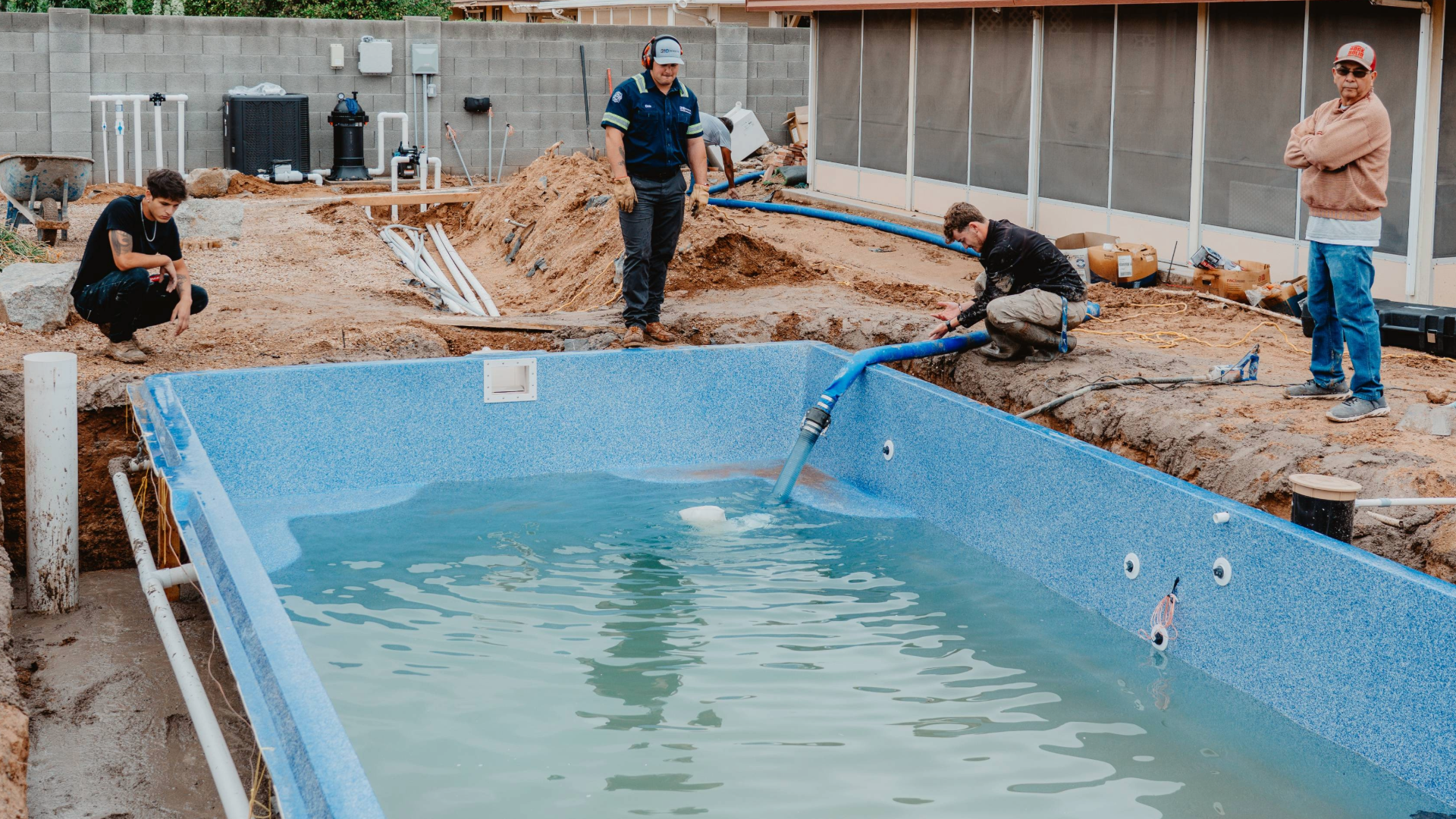
Fiberglass pools are often marketed as quick and straightforward to install. The simplicity can be misleading. Because the pool arrives as a pre-formed shell, the installation process has very little margin for error.
Installation is Everything
“With fiberglass, the installation is everything. If it’s not set, leveled, and backfilled correctly, that’s where problems can start.” - Shasta Designer, Jacob Priest
The Most Common Installation Risks
-
Improper leveling can cause stress on the shell
-
Incorrect backfilling may shift or create voids around the pool
-
Poor plumbing setup increases the risk of leaks behind the shell
Is a Fiberglass Pool Right for You?
Fiberglass pools offer real advantages. However, the faster installation and simplified maintenance come with tradeoffs. These tradeoffs are important to understand before you move forward.
The key limitations come down to three areas:
-
Design flexibility – you’re choosing from pre-set shapes
-
Surface care – long-term appearance depends on proper water chemistry
-
Installation precision – performance relies heavily on how well the pool is installed
At Shasta, we’ve worked with thousands of Arizona homeowners. We know the right pool isn’t the one with the best sales pitch. It’s the one that fits your priorities.
Fiberglass may be a great choice if you value:
-
Speed of installation
-
Lower day-to-day maintenance
-
Simplicity in design
It may not be the best fit if you want:
-
Full customization
-
Unique layouts or larger dimensions
-
Complete control over every design detail

FAQs
Q1. How does the slipperiness of fiberglass pools compare to other pool types? Fiberglass pools have a smooth, non-porous surface that can be more slippery than concrete or plaster pools.
Q4. What is the typical cost range for installing a fiberglass pool? Professional installation packages typically range from $35,000 to $60,000.
Q5. How long do fiberglass pools last before needing major repairs? Fiberglass pools can last for decades with proper maintenance.
References
Riverpoolsandspas.com Top 4 Fiberglass Pool Problems
Lathampool.com Latham Flipbook for Fiberglass Pools
Topics:
