

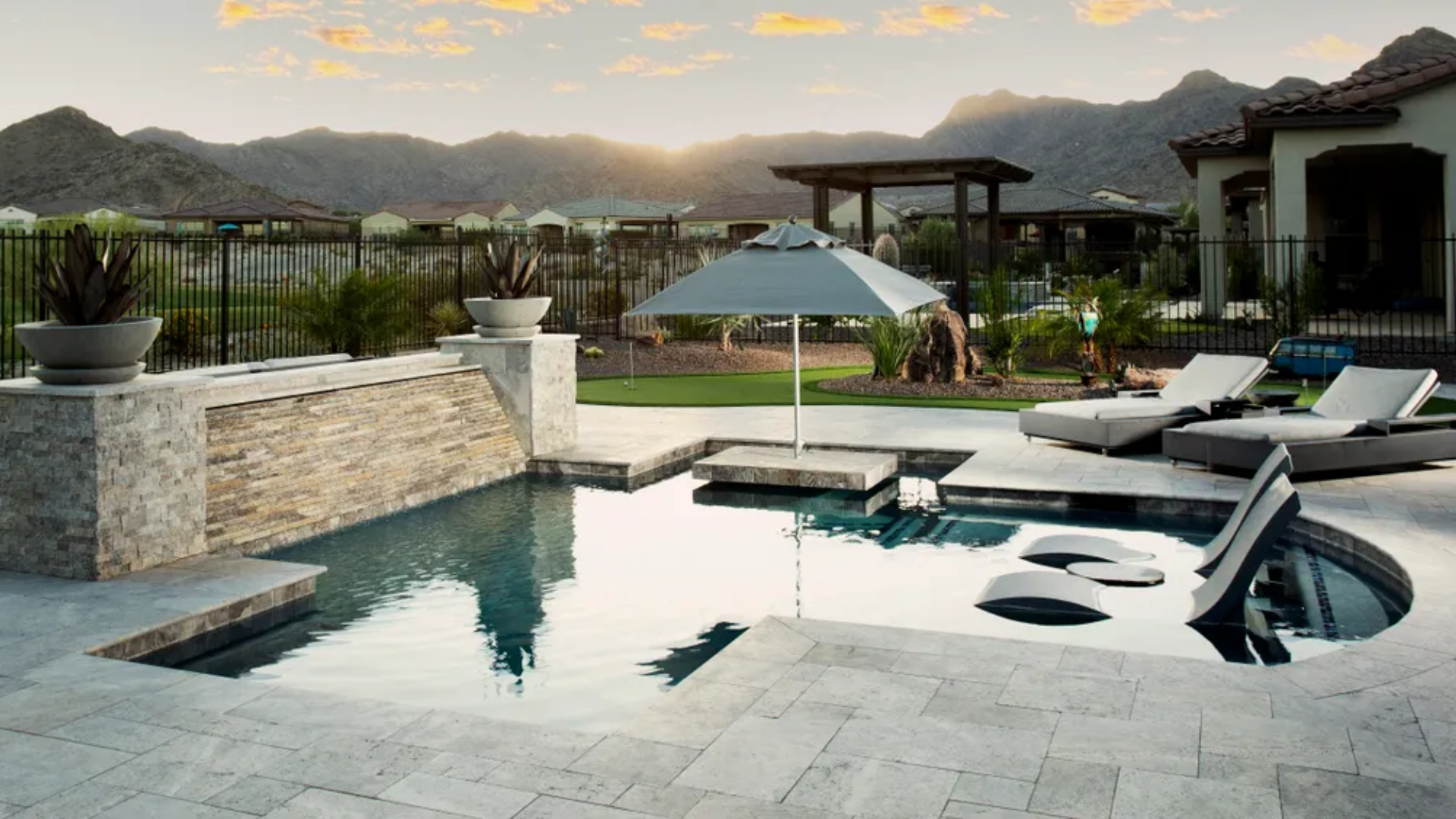
What should a homeowner go with for their pool deck? One contractor tells you to go with travertine. Another says you have to go with limestone with Arizona's heat. If you’re building or remodeling a pool, there are good options to pick from.
For some homeowners only how it looks is important. Alternatively, how hot the natural stone gets is vital. Then there is the decision on what deck materials offers the best long-term maintenance benefits.
Many pool companies don't offer the complete truth. There is no single “best” pool deck material. Every option from travertine to marble comes with trade-offs. The right choice depends on what matters most to you and how you plan to use your backyard.
In this guide, you’ll get clear answers to the most popular pool deck materials in Arizona. We showcase how the different stones perform in extreme heat and where each one falls short. Lastly, we share insights from natural stone experts that can help make better decisions.
Table of Contents
- What Is the Best Pool Deck Material?
- Is Travertine the Best Pool Deck Material in Arizona?
- Is Limestone the Coolest Pool Deck Material for Arizona?
- Is Marble the Best Pool Deck Material for a Modern Look in Arizona?
- Pool Deck Materials Comparison Table
- How to Choose the Right Arizona Pool Deck Material
What Is the Best Pool Deck Material?
There’s no single “best” pool deck material. However, you can choose the best choice based for your priorities. If you’re building a pool in Arizona, the decision comes down to a trade-off between heat, maintenance, durability, and appearance.
-
Best overall for Arizona: Travertine
-
Best for coolest surface: Limestone
-
Best for modern look + durability: Marble
Travertine offers the most balanced performance across all categories. The natural stone stays relatively cool and provides slip resistance.
What most homeowners don’t realize about choosing pool deck materials
“Travertine sits right in the middle. It gives you durability, reasonable maintenance, and better heat performance than most alternatives, which is why it’s so widely used. If staying cool is your top priority, limestone will feel cooler than travertine but it comes with more maintenance because it absorbs more. Marble is the most durable and stain-resistant option, but it retains more heat. So, you’re trading comfort for longevity and a more modern look.” - Derin Uras, Natural Stone Expert from ANS Mermer
Is Travertine the Best Pool Deck Material in Arizona?
For most homeowners, travertine is the best overall pool deck material in Arizona. Although, it depends on what you value most.
Travertine offers the most balanced performance. The natural stone works the best overall when you consider surface temperature, durability, slip resistance, and long-term usability.
Travertine delivers solid performance without the extreme trade-offs.
“Travertine is really that middle ground—it’s durable, it doesn’t retain as much heat as other materials, and it gives you a good balance without extreme trade-offs. A lot of homeowners are really choosing between heat and maintenance. Travertine lands right in between, which is why it works for most people.” - Derin Uras, ANS Mermer
Make sure you're choosing the right pool builder. The material you choose matters and the builder you choose matters even more. Long-term performance comes down to who’s building your pool. Read: Why Your Pool Builder Matters in Phoenix
Pros of Travertine
Travertine stays cool underfoot even when Arizona hits 115°F. Basically, travertine reflects heat instead of absorbing it. So, you can walk barefoot comfortably. The naturally textured surface grips wet feet and reduces slip risks around pools.
Travertine has been proving its durability for centuries. It handles pool chemicals, heavy foot traffic, and weather changes without cracking, chipping, or fading. Water drains through the porous surface rather than sitting on top, eliminating puddles and slip hazards. Properly maintained installations run 20 to 30 years or longer.
Cons of Travertine
You'll need to seal travertine every one to two years to prevent stains from pool chemicals, sunscreen, and leaves. That sealing costs $1.50 to $3.25 per square foot each time. Like all calcium-based stones, it etches when lemon juice or acidic cleaners hit the surface.
Each piece looks different because it's quarried straight from the earth. Many homeowners love this natural variation, but if you want perfectly uniform appearance, travertine won't deliver. When your specific color runs out at the quarry, you can't get an exact match until they find similar deposits elsewhere.

Is Limestone the Coolest Pool Deck Material for Arizona?
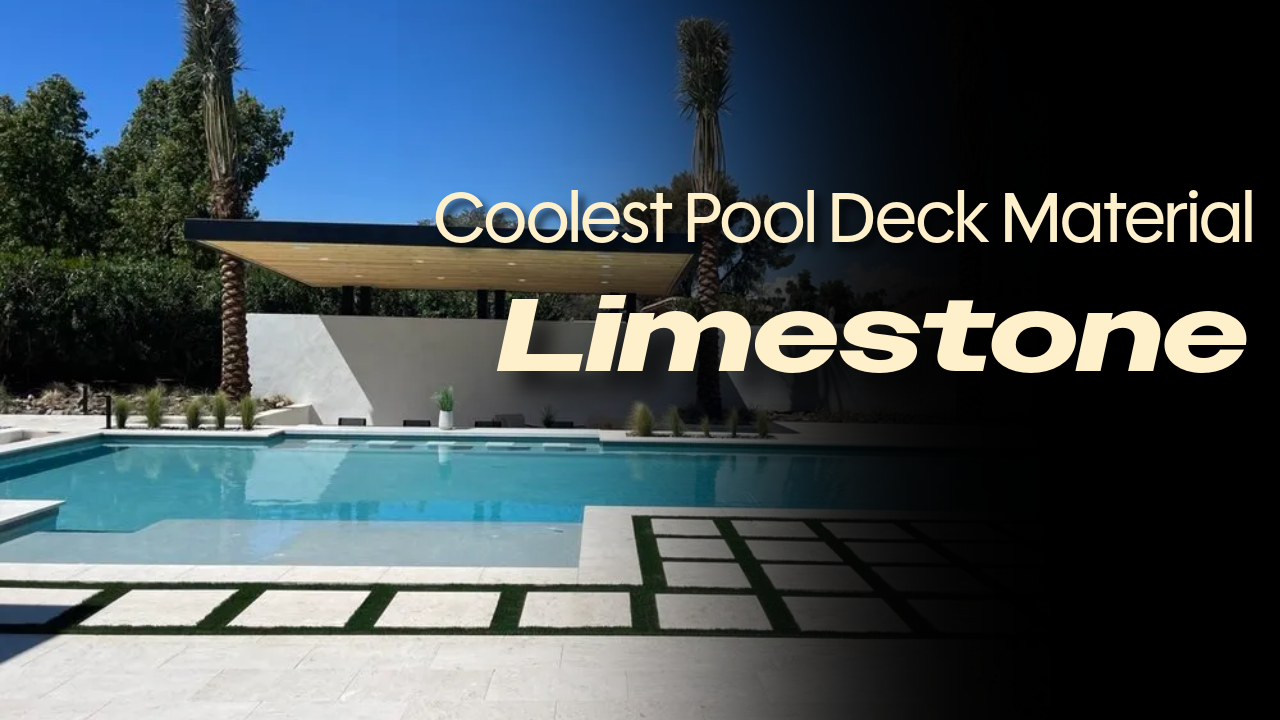
Yes, limestone is typically the coolest pool deck material available in Arizona. However, it comes with trade-offs. Specifically, limestone absorbs and releases heat more efficiently than other natural stones.
Keeping your pool deck as cool as possible
“If your main goal is the coolest surface, limestone will typically feel cooler than travertine because it absorbs and dissipates heat faster. The trade-off with limestone is maintenance. It absorbs more liquids, so you have to stay on top of sealing to prevent staining and wear. All materials get hot in Arizona. The difference is how quickly they heat up and cool down and limestone performs best in that category.” - Derin Uras
Arizona’s extreme sun, heat, and water chemistry can break down the wrong interior finish. Understand which pool finishes last the longest and perform best in Arizona’s climate. Read: Which Pool Finishes Hold Up Best in Arizona’s Sun and Heat
Why Pool Owners Choose Limestone?
Surface temperature testing confirms limestone's lower temperature rating. Concrete (135°F) and brick (125°F) create the hottest surfaces for your feet. Next, the stone delivers a compressive strength between 2,000 and 37,000 psi. Therefore, the dense composition means limestone handles heavy foot traffic and weather extremes.
The textured surface provides natural slip resistance when wet. Limestone cuts and shapes easily, working equally well for geometric pool designs or organic, curved installations.
What are the trade-offs for limestone pool decks?
Superior cooling comes with a price: limestone absorbs liquids more readily than denser stones. Pool chemicals, sunscreen, and organic debris stain more easily compared to travertine or marble. Acidic substances like citrus or harsh cleaners etch the surface.
Sealing isn't optional. Applications every one to three years protect against moisture and stains. If you don't seal the surface layers flake away. This is especially important for those with saltwater pools.

Is Marble the Best Pool Deck Material for a Modern Look in Arizona?
Yes, marble is one of the best choices for a modern and high-end pool deck in Arizona.
Marble's refined look offers a cleaner and more uniform appearance compared to more natural stones like travertine. Additionally, it’s commonly available in grays, whites, and cooler tones.
Contemporary pool deck that resists staining
“Marble is the densest of the three, so it doesn’t absorb as much liquid, which makes it more resistant to staining and erosion. If you’re going for a modern look, marble typically has more uniform color tones like grays and whites compared to the variation you see in travertine. The trade-off with marble is heat. It retains more heat and takes longer to cool down than travertine or limestone.” - Derin Uras
.png?width=1280&height=720&name=naturalstones%20(1).png)
Pros of Marble
Marble creates a high-end look that elevates any pool area. The stone showcases sandblasted finishes that emphasize the natural veining.
The dense structure absorbs far less liquid than limestone. Therefore, making marble more resistant to staining and erosion. Also, that density gives marble antibacterial properties. It can naturally resist bacteria, mold, and mildew in wet environments.
Tumbled marble provides excellent slip resistance. Honed finishes give you smooth surfaces with better traction. Lastly, polished marble shows off dramatic veining but becomes dangerously slippery when wet.
Sandblasted and leather finishes create tiny peaks and valleys that help reflect heat, keeping surfaces cooler than smooth versions.
Cons of Marble
Marble retains more heat than travertine or limestone and takes longer to cool down. This matters in hot climates where you want surfaces comfortable for bare feet.
Polished surfaces lose their shine quickly under constant sun. Wet marble becomes extremely slippery without surface treatments. Altogether, anti-slip coatings need frequent reapplication and add to maintenance costs.
Like other calcium-based stones, marble etches when exposed to acidic substances - citrus, harsh pool chemicals, or certain cleaners. You'll need stronger sealers that penetrate the dense structure, applied once or twice yearly.

Pool Deck Materials Comparison Table
|
Material |
Cost Per Sq Ft |
Lifespan |
Heat Resistance |
Slip Resistance |
Maintenance |
|
Travertine |
$20.37-$42+ |
20-30+ years |
Excellent - stays cool, reflects heat |
Excellent - naturally textured surface |
Sealing every 1-2 years ($1.50-$3.25/sq ft) |
|
Limestone |
$16.00-$32.00 |
20-25 years |
Excellent - cooler than travertine, dissipates heat faster |
Good - textured finish improves traction |
Sealing every 1-3 years |
|
Marble |
$24.00-$37.00/sq meter |
25+ years |
Moderate - retains more heat than travertine/limestone |
Variable - tumbled/honed good, polished very slippery |
Sealing 1-2 times yearly with stronger sealers |
How to Choose the Right Arizona Pool Deck Material
There isn’t one “best” pool deck material. There’s only the best choice based on what matters most to you.
-
If you want the best overall balance, travertine is what most Arizona homeowners choose.
-
If your priority is keeping your deck as cool as possible, limestone offers the best heat resistance.
-
If you’re going for a modern look with strong durability, marble is a great fit.
One of the biggest mistakes we see is choosing materials based on a showroom sample. Those samples are sitting indoors at 72 degrees. That’s not how they’ll perform in your backyard.
Take your top options and put them outside. Walk on them in the afternoon. See how they feel when it’s hot. Look at them in full sun and in the evening.
After building thousands of pools across Arizona, we’ve seen what homeowners wish they would’ve done differently. If you’re still deciding, the best next step is to talk through your options with someone who understands how these materials perform. You can then make a decision you feel confident about.

FAQs
Q1. Which pool deck material offers the best value for budget-conscious homeowners? Concrete is the most affordable pool deck material.
Q42. Which pool deck material stays coolest in hot climates? Limestone offers superior heat dissipation, staying cooler to the touch than other natural stones.
Q5. What pool deck material requires the least maintenance? Marble decking require minimal maintenance.
References
ANSMermer.com Premium Natural Stone
