

“I live in Arizona. It's 117 degrees outside. My flip-flops just melted. Should I really be putting a fiberglass pool in this oven?”
We hear you.
Look, if you’ve lived in Arizona long enough, you’ve probably dreamed of doing a full cannonball into your own pool at some point—especially mid-July when your steering wheel could fry an egg. And maybe (just maybe) you’ve started hearing about fiberglass pools being “low maintenance”, “easy to install”, or “budget friendly”.
So now you're Googling: Should I buy a fiberglass pool in Arizona?
Smart question—and it’s one we get a lot.
Let’s break it down, without the fluff. No B.S., no pressure—just the info you actually need to make a good decision. And yeah, we might quote a movie or two along the way.
“Help me, Obi-Wan Kenobi... You’re my only hope.”
(Or in this case: What is a fiberglass pool, and how the heck does it work?)
Alright, so fiberglass pools aren’t magic—but they’re kinda close.
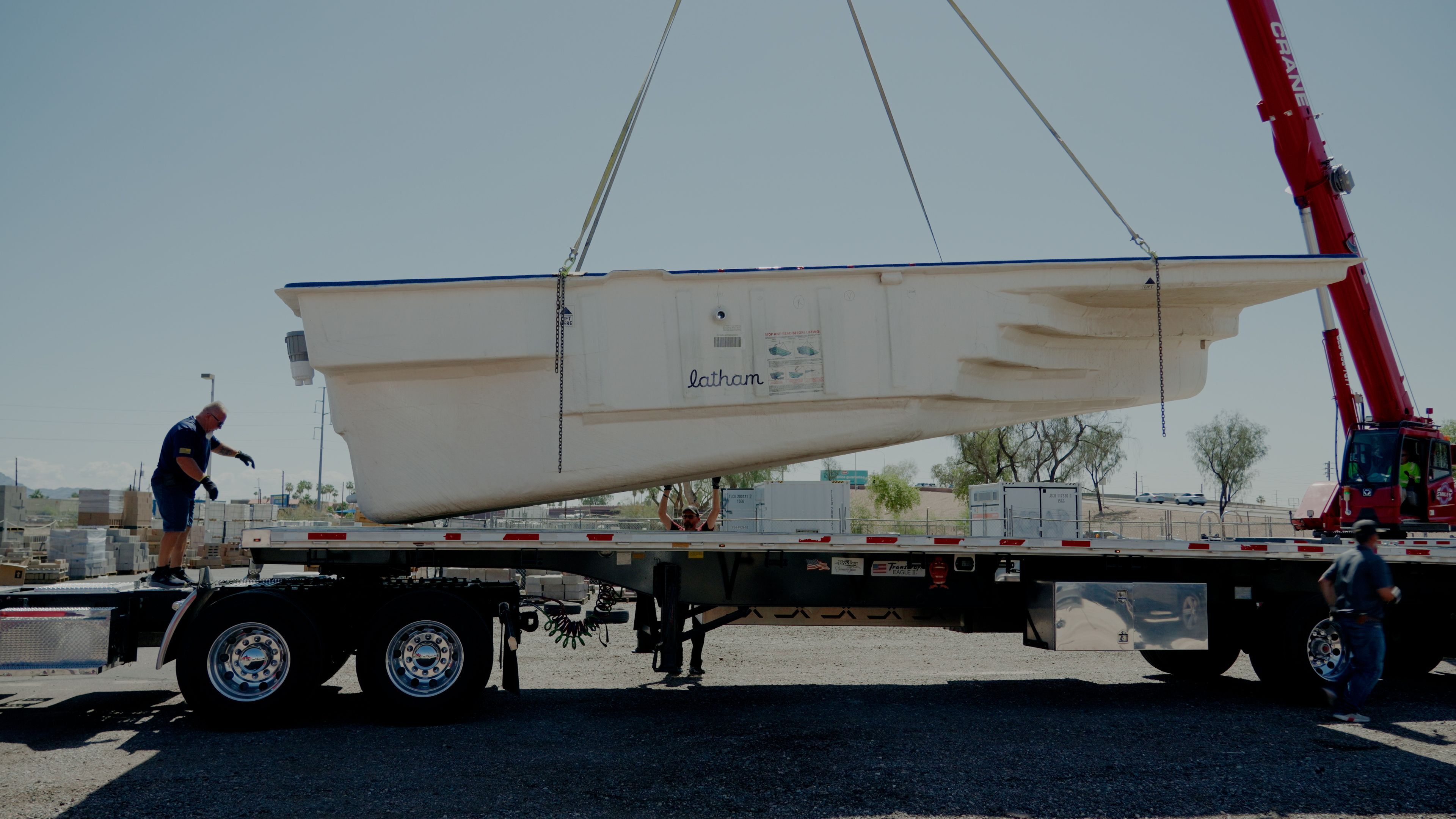
Instead of building your pool from scratch in your backyard, a fiberglass pool is a pre-molded shell built in a factory, then delivered to your home in one massive piece.
Crane drops it into a pre-dug hole.
Plumbing and backfill go in.
Decking gets poured.
You pretend you're Tony Stark relaxing by your pool.
It’s fast. It’s clean. It’s why so many people are curious. But—there’s always a but—we need to talk about whether fiberglass actually stands up to Arizona’s legendary climate.
Can Fiberglass Pools Handle Arizona’s Desert Drama?
Let’s not sugarcoat it: Arizona is tough on everything—roofs, tires, humans. So how do fiberglass pools stack up?
Heat and UV?
They actually handle it well! Fiberglass comes with a gelcoat finish that resists fading and sun damage. Lighter-colored pools do better here, though. Dark shells can feel like hot tubs by August. We think we have it rough with UV exposure in Arizona but in Australia, where they have an actual hole in the ozone layer, a higher percentage of fiberglass pools are installed over concrete pools...they hold up really well!
What about soil?
Ah yes—Arizona soil. It’s like a bad plot twist. We’ve got everything from caliche rock to loose sand, often in the same yard. And fiberglass is strong, it has flexile strength that a concrete pool doesn’t have. If the ground shifts, a well-engineered shell will flex with it…last we checked, concrete doesn’t like to flex.
So, if you go fiberglass, make sure your installer knows how to prep for Arizona soil. Spoiler alert: We do.
Pros and Cons of Fiberglass Pools in Arizona
Let’s rip the Band-Aid off. You need the good and the bad.
Pros
- Fast install
We’re talking 2–3 weeks, not months. One day you’re looking at dirt, the next you’re floating with a margarita. “Life moves pretty fast. If you don’t stop and look around once in a while... you could miss it.” – Ferris Bueller - Smooth surface
Say goodbye to scraped knees and “pool feet.” Fiberglass is easy on the body. Even Grandma will approve. - Low maintenance
Algae? Not today. The non-porous shell helps keep things clean, chemical usage low, and your weekends free. “You can’t handle the truth!” (Okay, yes you can. The truth is: maintenance is way easier.) - Energy efficient
Fiberglass insulates better than concrete. Less heat loss = more savings over time.
Cons
- Size & shape limitations
Want a custom Baja shelf with a firepit, waterslide, and underwater DJ booth? Not happening. You're limited to pre-made molds. - Delivery can be a pain
Tight yard? Power lines overhead? Angry neighbor with a Chihuahua named Spike? Delivery access is everything. The crane takes up some space on your street on delivery day but offer your neighbors on invite to the pool party and all will be forgiven.
How Much Does a Fiberglass Pool Cost in Arizona?
Okay, let’s talk numbers. Here’s your cheat sheet:
|
Type |
Price Range |
|
Basic fiberglass pool |
$55,000–$70,000 |
|
With full landscaping |
$80,000–$100,000+ |
Variables That Matter:
- Size of the shell: Bigger = more $$.
- Delivery logistics: Cranes aren’t free.
- Custom features: Spas, waterfalls, lighting = more cost.
- Your city’s permits: Mesa ≠ Scottsdale ≠ Glendale. Every city plays by different rules.
Compare that to a custom concrete pool starting around $70k and going past $150k. Fiberglass is usually cheaper—but not always.
Fiberglass vs. Shotcrete in the Arizona Desert Showdown
We’re not here to pick sides—we’re here to tell the truth.
|
Factor |
Fiberglass |
Shotcrete |
|
Durability |
Good—but sensitive to soil shifts |
Great. Handles tough soil like a champ |
|
Maintenance |
Low |
Medium to high – algae can cling to the interior finish |
|
Customization |
Limited |
Sky’s the limit |
|
Install time |
Super fast - few weeks |
Takes longer - few months |
|
Long-term cost |
Less chemicals; fewer repairs - no interior replacement cost |
Needs resurfacing every 10–18 years (depending on the interior finish) |
If pools were action heroes:
- Fiberglass = Spider-Man. Quick, smooth, reliable.
- Shotcrete = Iron Man. Durable, flashy, and full of custom upgrades.
Who Should (and Shouldn’t) Buy a Fiberglass Pool in Arizona?
You’re a good fit if:
- You want to be swimming yesterday
- You’re cool with a pre-designed shape
- Your neighbor doesn't mind a crane in the street for a few hours
- You value low maintenance over ultra-custom features
Maybe pass if:
- Your street is tighter than Luke Skywalker’s trench run
- You’ve got big ideas (lazy river, infinity edge, Batman logo at the bottom...)
- You want your pool to be as unique as your Spotify account
FAQs — Because Everyone Googles These
Will a fiberglass pool crack in Arizona?
The shell has a lifetime warranty. A concrete pool will crack before a well engineered fiberglass pool because of the flexile strength of the carbon fiber, but it can if installed wrong. Trust your installer. Seriously.
Can I install it in rocky soil?
Yes—same answer for a concrete pool. You'll pay more for excavation, but it’s doable.
How long will it last?
With care? 25–30 years easy. Maybe more.
Do fiberglass pools get too hot in summer?
Dark colors can. Lighter colors = slightly cooler temps. The same can be said of dark color pebble finishes for concrete pools.
Will my HOA approve it?
Most do, but check first. HOAs can be... picky. (Looking at you, East Valley.) The good news for tougher HOA’s is that construction is only weeks vs months for a concrete pool.
So... Should You Buy a Fiberglass Pool in Arizona?
Here’s the real deal:
YES, if you want something fast, simple to maintain, and low-fuss.
MAYBE, if your yard is tricky or your wish list looks like a Disneyland ride plan.
NO, if you need full-blown custom and don’t mind waiting.
Remember: you’re not just buying a pool. You’re buying how your family will spend summers for the next 20 years.
Ready to Talk It Through? Let’s Make Some Magic Happen.
Not sure where to start? Want someone to shoot straight with you (without the pushy sales pitch)?
Schedule a free design consultation with our Shasta Pools team. We’ll help you figure out what works best—fiberglass or otherwise—and what works best for you.
Because as the great philosopher Doc Brown once said:
“Your future hasn't been written yet. No one's has. So make it a good one.”
Dhruv Gangwal is the Marketing Director at Shasta Pools, Arizona’s leading pool builder. With extensive experience in strategic marketing, consumer behavior, and the evolving trends of outdoor living, Dhruv is dedicated to helping homeowners make informed, confident decisions about their pool investments. He works closely with Shasta’s design and sales teams to craft educational resources that simplify the pool-buying process and highlight the latest innovations in backyard living. Dhruv’s articles provide practical advice that homeowners can trust.
Topics:
