

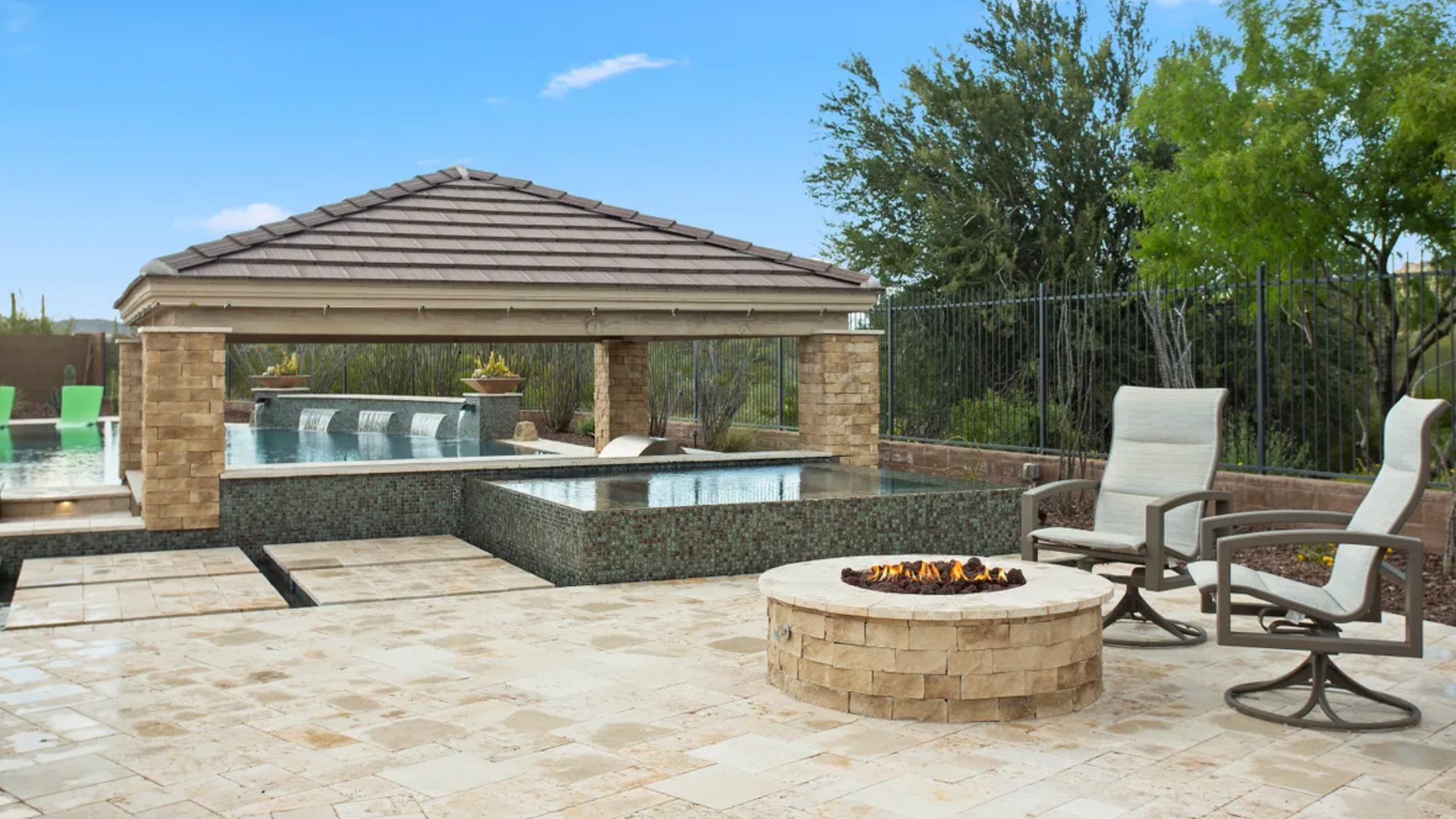
You've probably heard both travertine and marble mentioned when researching natural stone for your pool deck. Today many people use the term travertine to represent pool decking. Even when they don't necessarily want travertine.
Specifically, travertine and marble are completely different materials. They perform differently in Arizona's heat and require different maintenance. Also, each natural stone costs different amounts upfront and over time.
After 60 years of building pools, we've seen how each natural stone works best. Some people prioritize staying cool underfoot. However, other homeowners want the lowest possible maintenance. Still others care most about long-term durability or upfront cost.
In this article, we compare how each stone handles Arizona's extreme conditions. Next, we share what kind of upkeep you can expect, and which situations favor one material over the other. By the end, you'll know which option makes sense for your specific backyard and lifestyle.
Table of Contents
- What Makes Travertine and Marble Different?
- How Each Stone Performs in Arizona’s Extreme Climate?
- What You Need to Know About Cost, Maintenance, and Installation?
- Making the Right Choice for Your Arizona Backyard
What Makes Travertine and Marble Different?
Travertine and marble both are premium natural stone options. Although, how they’re formed and how they interact with Arizona’s climate are very different.
Here’s the simple way to think about it:
- Travertine = porous, breathable, and forgiving
- Marble = dense, polished, and more heat-retentive
Travertine vs Marble
“The main differences between these stones come down to density and porosity. Travertine has natural air pockets that make it more breathable and help it release heat faster, while marble is much denser, so it holds heat longer but resists absorption.” - Derin Uras, Natural Stone Expert from ANS Mermer
Travertine: Built for Arizona Pool Decks
Travertine forms when calcium carbonate deposits that settle near hot springs and limestone caves. That process creates the stone's signature look. The natural stone provides a porous surface with natural pits.
Those pores aren't defects. They're what make travertine work so well around pools. The textured surface gives you natural slip resistance. Additionally, the stone's structure helps it stay cooler underfoot.
Travertine comes in earthy colors like beiges, creams, and light browns. Derin from Ans Mare, whose family has worked with natural stone since 2007, puts it this way: travertine absorbs heat during the day but releases it faster than concrete pavers or porcelain tiles. That makes it practical for barefoot traffic around pools.

Marble: Dense, Beautiful, and Different
Marble starts as limestone but gets transformed deep underground under intense pressure and heat. This process creates a more dense, crystalline, and harder stone than travertine (3-5 on the Mohs scale versus travertine's 3-4).
The marble stone offers a striking veining patterns and a smooth texture. It can be pure white, deep black, or anywhere in between. Altogether, the mineral impurities create those distinctive veins that run through each piece.
Because marble is denser, it absorbs less water and resists staining better. However, the same density means it holds heat longer and takes more time to cool down.
How Each Stone Performs in Arizona’s Extreme Climate?
Arizona tests how travertine and marble feels and performs every day. When temperatures hit 110–115°F, small material differences become very noticeable.
Travertine's Arizona Performance
-
Stays cooler underfoot
-
Naturally slip-resistant
-
Dries faster and handles daily use better
Marble's Arizona Performance
-
More heat retention
-
Smoother surface
-
Denser and more stain-resistant
Lower Heat Retention vs More Stain-Resistant
“Travertine absorbs heat, but it dissipates it quicker than something like concrete or porcelain, so it ends up being far less hot on a normal sunny day. There’s really a trade-off, though. Travertine sits in the middle. It’s durable and doesn’t retain as much heat while marble is denser, more stain-resistant, but it’s going to hold more heat.” - Derin Uras, Natural Stone Expert from ANS Mermer
Heat Resistance: The Barefoot Test
Surface temperature matters when it's 115°F outside and you want to walk around your pool without shoes.
Travertine's porous surface creates better air circulation. That porosity helps the stone breathe and release heat faster. Travertine stays about 20% cooler than concrete.
Marble is an excellent insulator and stays relatively cool on hot days. However, it holds onto heat longer once it gets warm. Basically, travertine dissipates it more quickly.
Slip Resistance When Wet
Travertine has a naturally textured and non-shiny surface that helps prevent slipping when wet. Those natural pores and slight texture variations provide excellent traction.
Marble becomes naturally slippery when wet because of its smooth and dense structure. You can treat marble to reduce slipperiness, but those treatments require ongoing maintenance.
What You Need to Know About Cost, Maintenance, and Installation?
The real difference between travertine and marble is how much effort and attention each material requires. Travertine offers a more forgiving stone that makes installation simpler. Conversely, marble provides a higher upfront investment that requires more precision during installation.
Travertine
-
Lower upfront cost and easier installation
-
Requires regular sealing due to porosity
-
More forgiving in daily maintenance and long-term use
-
Performs well with consistent but simple care
Marble
-
Higher upfront cost and more complex installation
-
Requires strong sealers and added treatments (like slip resistance)
-
Holds up structurally but needs more careful maintenance
-
Higher long-term effort to maintain appearance and safety
Understanding Travertine and Marble Maintenance
“A lot of the issues people run into aren’t really about the stone—they come from not understanding the maintenance or skipping things like sealing. If you protect it properly and know what to expect going in, both materials can perform really well.”
Upfront Investment: Travertine vs. Marble Pricing
Travertine requires a smaller initial investment. You're typically looking at $12 to $25 per square foot installed.
Marble costs more upfront. The materials themselves cost more. Also, the installation is more labor-intensive due to the denser material, and you'll often need additional treatments to address slip resistance.

Sealing: Both materials need sealing.
Travertine's porous structure demands water-based sealants applied during installation. Plan on resealing every 2 to 3 years for general protection.
Marble requires stronger penetrating sealers that can work through its dense structure. The timeline is similar, but the products cost more and the application is trickier.
Daily Maintenance That Works
-
Use pH-neutral stone cleaners only. Acidic products etch the surface
-
Sweep regularly to prevent dirt buildup and scratching
-
Clean spills immediately, especially oils and pool chemicals
How Long Can You Expect These to Last?
With proper maintenance, travertine can last 50 to 100 years. Marble has similar longevity when cared for correctly. Both materials outlast most other flooring options when you follow the maintenance schedule.
Compare Travertine vs Marble
|
Feature |
Travertine |
Marble |
|
Material Type |
Sedimentary rock (technically a type of limestone) |
Metamorphic rock |
|
Formation Process |
Formed from calcium carbonate deposits near hot springs and limestone caves; precipitates from mineral-rich water |
Formed through metamorphism of limestone under intense pressure and high temperatures deep within Earth's crust |
|
Structure |
Porous with natural pits and voids; characteristic textured appearance |
Dense, crystalline structure with veining and smooth texture |
|
Porosity |
High porosity (10% to 70%, averaging 26% for hot spring travertines) |
Lower porosity; less susceptible to water absorption |
|
Hardness (Mohs Scale) |
3 to 4 |
3 to 5 (harder than travertine) |
|
Color Options |
Softer, muted tones in beige, brown, and cream ranges; earthy tones |
Wide spectrum from pure white to deep black; extensive options including classic white-gray to deep, rich tones |
|
Visual Characteristics |
Natural pits and voids; organic appearance with color variation |
Striking veining patterns from mineral impurities; polished finish with reflective qualities |
|
Heat Resistance |
Stays 20% cooler than concrete; porous surface offers better air circulation; absorbs heat but dissipates it quicker than concrete pavers or porcelain |
Excellent insulator; stays relatively cool but retains more heat and takes longer to dissipate than travertine |
|
Slip Resistance |
Naturally textured, non-shiny surface; excellent traction when wet due to porous surface and natural grooves |
Naturally slippery when wet due to smooth, dense structure; requires treatments to reduce slipperiness |
|
Durability |
Doesn't crack easily in hot or cold temperatures; less prone to damage from moisture and wear |
Durable with proper care; polished surface tends to lose shine more quickly under constant direct sunlight |
|
Water Drainage |
Porosity allows water to seep into stone, preventing surface accumulation; absorbs small amount of water resulting in fewer puddles; dries more quickly |
Lower water absorption due to lower porosity |
|
UV/Fade Resistance |
Resists UV exposure well; colors like ivory remain light and walnut retains earthy warmth without artificial fading |
Prolonged direct sunlight can lead to fading; polished surface loses shine more quickly under constant direct sunlight |
|
Sealing Requirements |
Water-based sealants applied during installation; resealing every 2-3 years (pool decks every 1-2 years due to chlorine and UV) |
Requires stronger penetrating sealers that work through dense structure; similar resealing schedule |
|
Maintenance Level |
pH-neutral stone cleaners; regular sweeping; address spills immediately; least headache with good durability |
pH-neutral stone cleaners; regular sweeping; address spills immediately; ongoing maintenance for slip treatments |
|
Esthetic Style |
Classic looks with color variation; rustic charm; blends seamlessly with natural surroundings; organic outdoor spaces |
Modern designs; monotone, gray, or blue options; timeless elegance and wealth; luxurious appearance |
Making the Right Choice for Your Arizona Backyard
For many Arizona homeowners, travertine is the practical choice. It stays cooler underfoot and offers natural slip resistance. Although, marble can absolutely work. It’s better suited for those prioritizing that modern look.
Small differences in heat and texture don’t sound like much. However, you feel them yourself on a hot day. That’s why important to test each stone. Take samples into your backyard and let them sit in the sun. Walk on them barefoot and see how they feel.
At Shasta Pools, we’ve been helping Arizona families choose the best material for their deck. We help you choose what will work for your lifestyle long after the pool is finished.

FAQ
Q1. Is travertine slippery when wet around pools?
No, travertine is not particularly slippery when wet. Its naturally textured, porous surface with grooves and pits provides excellent traction even when wet.
Q2. Does travertine need to be sealed for pool deck applications?
Yes, travertine should be sealed to protect it from staining and water damage. Water-based sealants should be applied during installation.
Q3. How does the porosity of travertine compare to marble?
Travertine is significantly more porous than marble. This higher porosity allows water to seep into the stone, preventing surface puddles and providing better drainage.
Q4. What is the typical cost difference between travertine and marble for pool decks?
Travertine typically costing between $12 to $25 per square foot installed. Marble requires a higher initial investment due to its denser material, more labor-intensive cutting and installation process, and additional expenses for slip-resistance treatments.
References
Ansmemer.com Tools and Resources
Usenaturalstone.org Natural Stone Plunge Pools
Naturalstoneinstitute.org Travertine, Limestone and Dolomitic
