

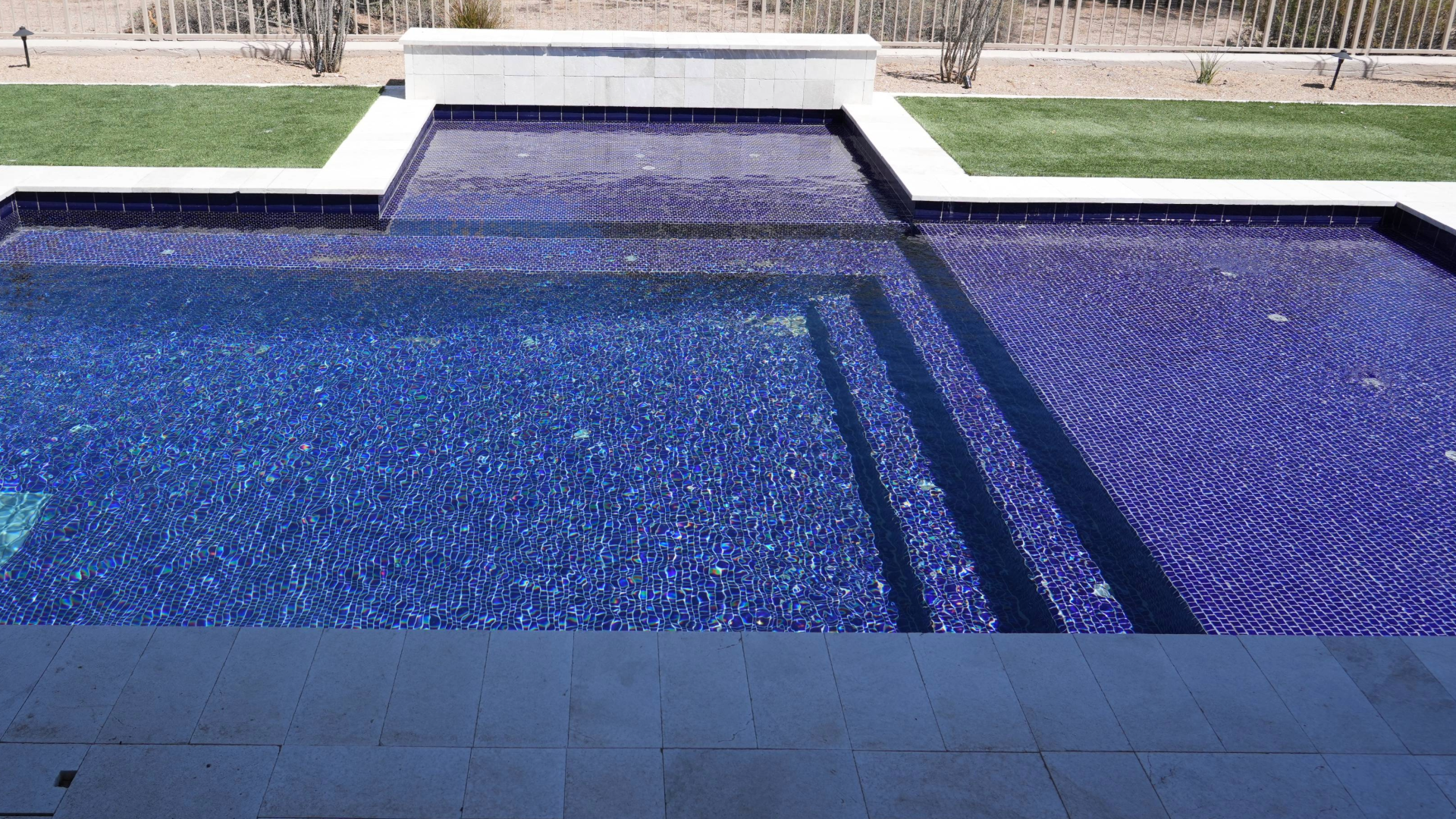
The right pool finish matters everywhere and in Arizona it seems to matter more. Triple-digit temperatures create constant stress on your pool. Intense UV exposure, extreme heat, and heavy chemical demand can prematurely age or outright destroy finishes.
After decades of building pools, we find most homeowners underestimate how aggressively Arizona’s climate attacks their pool's interior. Traditional plaster finishes that may last 10–15 years elsewhere often show significant wear in as little as 5–10 years. Pebble and aggregate finishes withstand heat, UV exposure, and chemical demand and regularly last 15–20+ years.
Durability is vital when your pool is exposed to sun and heat almost every day. Often, cooler regions' finishes can fade, etch, stain, or deteriorate rapidly here. Pool owners in Phoenix, Mesa, Tempe, and Scottsdale consistently find that aggregate-based finishes outperform softer surfaces.
In this guide, we’ll break down how the most common pool finishes perform under Arizona’s extreme conditions. We will investigate what holds up and what fails early. Lastly, you leave understanding what keeps your pool looking great and performing for decades.
Table of Contents
- Why PebbleTec Pool Finish is the Top Choice for Arizona Pools?
- Which Pool Finish Survives Arizona’s Climate Best?
Why PebbleTec Pool Finish is the Top Choice for Arizona Pools?
PebbleTec has earned its reputation as the go-to choice for Arizona pool owners. This aggregate finish replaces the soft cement "paste" of traditional plaster with hard natural stone pebbles. Therefore, it creates a surface that can handle our desert climate. Now, PebbleTec products are predominately what Shasta Pool installs.
According to Shasta finish expert Aric Metelski, one of the biggest mistakes homeowners make is assuming all “pebble” finishes are the same. PebbleTec is the brand, not just loose stones mixed into plaster. Its proprietary binders and installation standards are what allow it to outperform generic or knockoff pebble products. Especially, many Phoenix homeowners find generic products fail in our extreme climate.
What is the Durability of PebbleTec Pool Finish?
Here's what sets PebbleTec apart: it typically delivers 20-30 years of service life, roughly double what you'll get from plaster. That longevity comes from its composition—natural stone aggregates that resist UV damage and chemical fluctuations better than synthetic materials that break down under intense sun.
The stone components make all the difference. While plaster gradually erodes and etches under Arizona's conditions, PebbleTec's natural pebbles remain stable year after year. Pool professionals report that PebbleTec experiences gradual color softening rather than the dramatic bleaching or cracking you see with other finishes.
Even under our extreme conditions—triple-digit temperatures, intense UV exposure, and year-round use. PebbleTec routinely delivers two to three decades of service before requiring replacement. That's not marketing fluff; it's what happens when you build a surface specifically designed to handle harsh environments.
What is the Cost of PebbleTec Pool Finish?
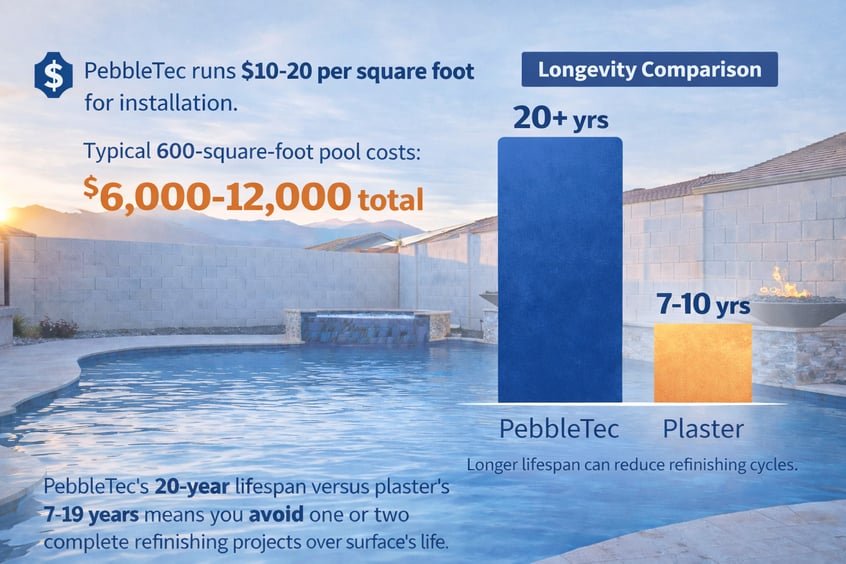
PebbleTec runs $10-20 per square foot for installation. For a typical 600-square-foot pool, expect to pay $6,000-12,000 total.
Several factors affect your final cost:
- Finish type (Pebble Fina costs least; Pebble Brilliance costs most)
- Pool shape (freeform pools cost more than rectangles)
- Surface condition (repair needs before application)
- Add-ons like abalone shell, glass beads, or glow elements
That's a significant jump over plaster, but the math works when you factor in longevity. PebbleTec's 20-year lifespan versus plaster's 7-10 years means you avoid one or two complete refinishing projects over the surface's life.
What are the Best Use Cases for PebbleTec Pool Finish?
PebbleTec makes sense when:
- You plan to stay in your home long-term and want maximum durability
- Your pool gets year-round use in our intense sun
- You prefer natural textures that complement desert landscaping
- Safety matters—the textured surface provides secure footing
- You have a spa or heated pool where temperature resistance is crucial
The textured surface excels in heated applications where plaster often fails early. It's also ideal for saltwater systems once properly cured and balanced.
Best Choice for Arizona Homeowners
“PebbleTec is the best choice for homeowners who want maximum durability in a harsh climate like Arizona. It’s not just pebbles mixed into plaster—it’s a proprietary system with specific polymers and binders built into the finish. That’s what allows it to withstand extreme heat, UV exposure, and aggressive water chemistry far better than traditional plaster or imitation pebble products. When longevity matters, especially in year-round swimming environments, PebbleTec consistently outperforms other interior finishes.” - Aric Metelski, Shasta Pool Designer

How Does Plaster Pool Finish Hold in Arizona Weather?
Traditional plaster continues to be the most common pool finish choice across Arizona. This classic mixture of white portland cement and marble dust creates that smooth and bright surface most people picture when they think of swimming pools.
What is the Durability of Plaster Pool Finish?
Plaster finishes typically deliver 7-10 years of service with proper maintenance. Some sources claim up to 20 years is possible with exceptional care, but Arizona conditions make that unlikely for most pools.
The biggest durability challenge comes from installation timing. When plaster is applied during Arizona's extreme heat—temperatures above 90°F with humidity around 30%—the surface dries too quickly and stops the critical hydration process. This creates a soft, weak finish that can't handle constant water exposure.
Once installed, plaster faces ongoing durability issues in our climate. The combination of intense UV exposure and chemical treatments steadily erodes the surface. This erosion happens faster here than in moderate climates, especially when water chemistry drifts out of balance. Heat exposure also makes plaster more prone to etching and staining over time.
Plaster Not Made for Arizona's Climate
“Plaster simply isn’t built for Arizona’s climate. With our extreme heat, intense UV exposure, and the higher chlorine and acid levels required to keep pools safe in warm water, plaster finishes erode very quickly. Even with good maintenance, we regularly see plaster stain, etch, and discolor within just a few years. That’s why we don’t recommend it here—homeowners almost always regret choosing plaster once they see how fast it breaks down in desert conditions.” - Herschel Holder, Shasta Pools Remodeling
What is the Cost of Plaster Pool Finish?
Plaster represents the most budget-friendly pool finish option. Installation typically costs $4.00 to $7.00 per square foot. A standard 16x32 foot pool (roughly 1,088 square feet) runs about $5,440 to replaster at $5.00 per square foot.
National averages range from $2,869 to $4,696 for complete replastering jobs. This makes plaster significantly less expensive than quartz or pebble alternatives. Costs increase if existing plaster needs extensive repair work or if you're adding services like retiling.
What are the Best Use Cases for Plaster Pool Finish?
Plaster makes the most sense when budget is the primary concern, but you still want a traditional, clean appearance. It works particularly well for homeowners who:
- Plan to sell within 5-10 years
- Can maintain strict water chemistry consistently
- Are comfortable with regular maintenance requirements
- Prefer a smooth surface for comfortable swimming
- Want flexibility to change the pool's look during future renovations
Plaster also strengthens the pool's structural integrity, making it a practical choice for older pools needing restoration. For the right situation, standard white plaster does exactly what it should—provide a watertight, functional surface for 10-15 years with diligent maintenance.
For Arizona installations specifically, plaster performs best with climate-adapted techniques. This means installing during cooler months or using "tenting" methods with evaporative coolers to provide cool, humid air during application. These approaches significantly improve durability in our desert conditions.
|
Not All Installs Are the Same |
|
How Tile Pool Finish Holds Up in Arizona?
Tile represents the premium standard for Arizona pool finishes. There's a reason why luxury pool owners consistently choose it despite the high price. Tile delivers performance and beauty that other materials simply can't match.
What is the Durability of Tile Pool Finish?
Tile finishes routinely last 25+ years with proper installation and maintenance. That's not just marketing—it's what we see in the field. While other finishes gradually deteriorate under Arizona's punishing conditions, quality pool tile maintains both its structural integrity and visual appeal for decades.
The durability advantage comes from the material itself. Porcelain tiles feature dense, vitrified bodies with water absorption rates below 0.5%, making them ideal for constant submersion. This non-porous structure means they won't crack or deteriorate when temperatures swing from 115°F during the day to 85°F at night.
Glass tiles perform even better, offering superior resistance to UV rays, pool chemicals, and thermal shock. They stay essentially impervious to water damage and typically hold up for 15+ years even in the most demanding environments. These characteristics make tile particularly well-suited for Arizona, where other materials fade, etch, or degrade rapidly.
What is the Cost of Tile Pool Finish?
Tile sits at the premium end of pool finishes, with complete interior installations typically running $15,000 to $30,000. Square footage costs vary significantly by material:
- Ceramic and porcelain tiles: $15 to $35 per square foot (installed)
- Glass tiles: $35 to $65 per square foot
- Stone tiles: $25 to $55 per square foot
- Mosaic tiles: $45 to $90 per square foot
Waterline tile applications cost substantially less. Basic installations average around $300, with standard tile running $2,100 to $2,800. Special-order tiles add $400–$800, while glass tile typically costs about $600 extra.
What are the Best Use Cases for Tile Pool Finish?
Tile proves ideal for specific Arizona pool applications:
-
Luxury residential pools where long-term investment and visual quality matter more than initial cost. The enhanced appeal and reduced maintenance justify the premium for discerning homeowners.
-
Spas and heated pools where temperature fluctuations might damage other finishes. Tile's exceptional heat and chemical resistance makes it perfect for high-stress environments.
-
Properties seeking distinctive visual appeal where customization options matter. For homeowners wanting truly unique aquatic environments that complement Arizona's architectural styles, tile offers unlimited creative possibilities.
-
Commercial pools that benefit from tile's longevity and reduced lifecycle costs. Despite higher upfront investment, extended service life and decreased maintenance often yield substantial long-term savings.
Tile represents the ultimate choice for Arizona pool owners who want maximum durability, minimal maintenance, and superior looks in our demanding desert climate. When properly installed by experienced professionals, tile finishes deliver decades of beauty and performance under Arizona's relentless sun.
|
Before You Choose a Pool Builder, Ask the Right Questions |

|
Is Quartz Aggregate Pool Finish Good for Arizona?
Quartz aggregate sits right in the sweet spot for Arizona homeowners. Often pool owners want something better than plaster but aren't ready for the premium price of tile. This finish combines cement with colored quartz particles to create a surface that sparkles in our abundant desert sunlight and stands up to the punishment our climate delivers.
Think of quartz as the practical middle choice. It gives you significantly better performance than standard plaster without the sticker shock of premium finishes.
Most Quartz Products are Plaster-Based
“Quartz aggregate finishes can be a good option for homeowners who want a smoother, plaster-like feel, but they don’t perform as well as pebble finishes in Arizona’s climate. Most quartz products are still plaster-based, which means they’re more susceptible to staining, etching, and chemical wear in our heat. In our experience, quartz typically lasts longer than standard plaster, but it doesn’t come close to the long-term durability of a true pebble finish—especially for pools that are used year-round.” - Herschel Holder, Shasta Pool Remodeling
Durability of Quartz Aggregate Pool Finish
Quartz finishes typically deliver 12-18 years of service life with proper maintenance. That puts them right between plaster's 7-10 years and pebble finishes that can last 20+ years. Premium quartz systems can push toward 18 years or more, while standard grades usually perform in the 12-15 year range.
The key to quartz's durability is its hardness. Quartz ranks among the most durable minerals you can use in pool construction. That translates to better resistance against:
- UV damage and chemical wear
- Etching from water chemistry fluctuations
- Physical degradation under Arizona's intense heat
Silica-based quartz finishes like PebbleQuartz offer significantly greater durability than traditional marble-based quartz options, which matters when your pool faces 115-degree days for months at a time.
PebbleQuartz is Different than Standard Quartz Finish
“PebbleQuartz is very different from what most people think of as a quartz finish. A lot of quartz products in the market are really just plaster with quartz added to it, and those have about the same durability as plaster—typically seven to ten years. PebbleQuartz, on the other hand, is built with the same polymers and binders as PebbleTec and PebbleSheen. It feels smoother like plaster, but it has the durability of a pebble finish and can easily last 20 years or more when properly maintained.” - Aric Metelski, Shasta Pools Designer
What is the Cost of Quartz Aggregate Pool Finish?
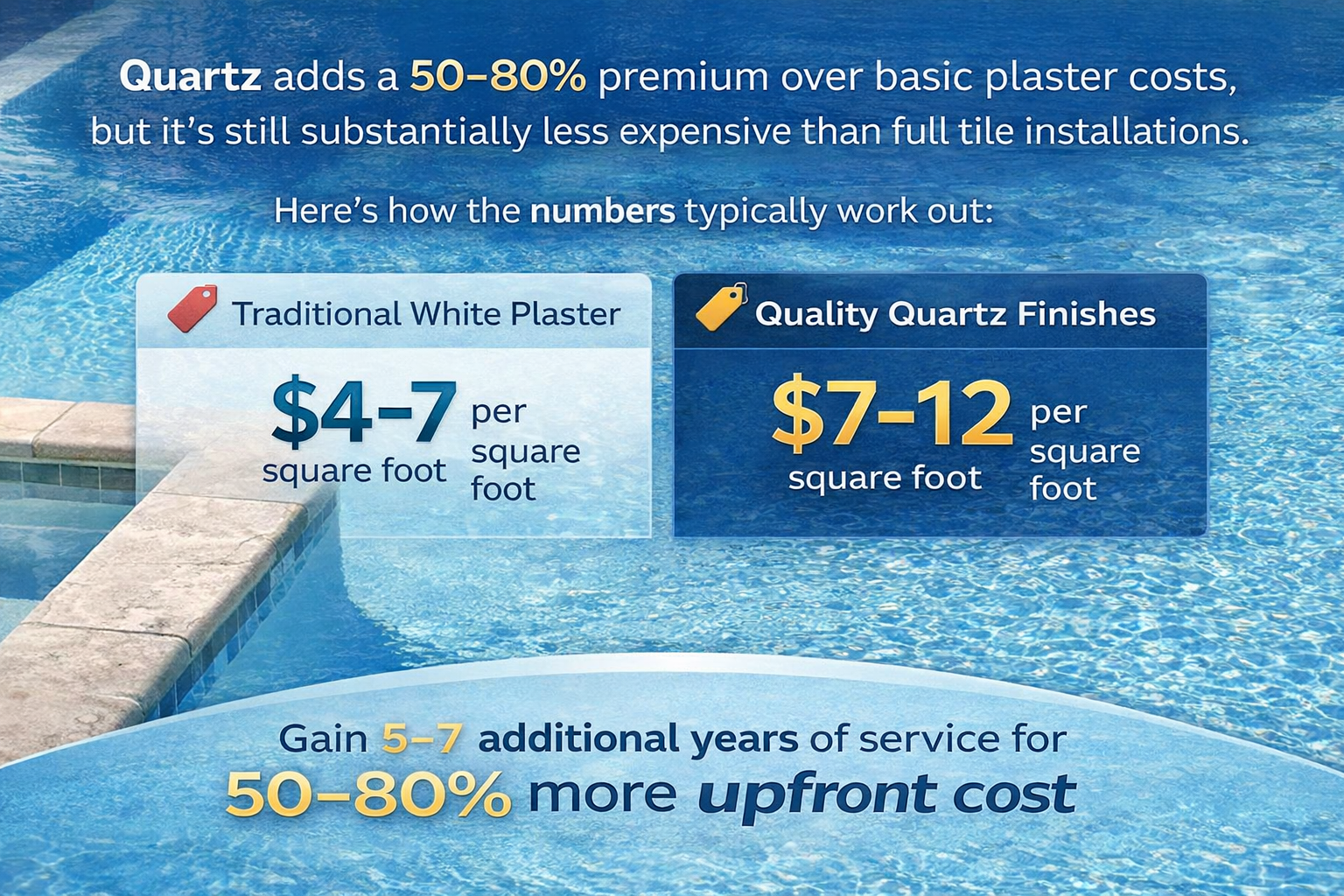
Quartz adds a 50-80% premium over basic plaster costs, but it's still substantially less expensive than full tile installations.
Here's how the numbers typically work out:
- Traditional white plaster: $4-7 per square foot
- Quality quartz finishes: $7-12 per square foot
The math often works in quartz's favor when you factor in the extended lifespan and reduced maintenance needs. Most Arizona homeowners find the extra upfront cost justified by getting 5-7 additional years of service compared to standard plaster.
What are the Best Use Cases for Quartz Aggregate Pool Finish?
Quartz works exceptionally well for:
- Contemporary pool designs where visual appeal matters
- Family pools that need durability but comfort underfoot
- Properties where color retention is crucial despite constant sun exposure
- Mid-range renovation projects seeking significant upgrades from plaster
- Pools with good maintenance programs that maximize performance
Quartz excels in Arizona because it provides substantially better UV and chemical resistance than standard plaster while staying more budget-friendly than premium options. For many homeowners, it hits the sweet spot between performance and value—that perfect middle ground for our challenging pool environment.
|
Your Pool Budget Shapes More Than the Price |
.png?width=1080&height=1080&name=questions2%20(1).png)
|
Is the Fiberglass Pool Finish a Good Arizona Option?
Fiberglass pools work differently than everything else we've covered so far. Instead of applying a finish to a concrete shell, you get a complete factory-manufactured shell with a colored gelcoat surface. This approach is gaining traction in Arizona because it sidesteps some of the installation challenges our climate creates for traditional finishes.
What is the Durability of Fiberglass Pool Finish?
Fiberglass delivers 20+ years of service with proper care, putting it in the same durability range as premium aggregate finishes but through completely different material properties. The key difference is flexibility. Where concrete-based finishes crack under ground movement, fiberglass shells flex and adapt.
Arizona's sun does affect fiberglass, but the damage pattern is different:
- Color fading happens gradually, especially in darker gelcoats
- Surface oxidation creates a chalky appearance over time
- Fine cracking ("spidering") can develop from thermal expansion
The good news? Even with these issues, fiberglass shells maintain their structural integrity far longer than plaster surfaces. Most manufacturers design their products for 15-25 years before major resurfacing becomes necessary.
What is the Cost of Fiberglass Pool Finish?
When a fiberglass pool needs resurfacing, costs range from $5,000 to $15,000 depending on your pool's size and current condition. Your options break down like this:
- Basic gel coat resurfacing: $5,000-$8,000
- Epoxy or polymer coating: $7,000-$12,000
- Complete fiberglass layer replacement: $12,000-$20,000
The higher upfront cost compared to plaster often pays back through extended lifespan (15-30 additional years after resurfacing) and reduced maintenance expenses.
What are the Best Use Cases for Fiberglass Pool Finish?
Fiberglass excels in Arizona for reasons that have nothing to do with traditional finish durability. The material handles our extreme temperature swings without cracking. Ground movement doesn't create the same problems it does with rigid concrete shells, and the non-porous surface reduces your chemical maintenance burden.
Fiberglass makes sense if you want:
- Minimal long-term maintenance responsibilities
- A solution for challenging soil conditions
- Better energy efficiency and heat retention
- Fast installation (days instead of weeks)
For Arizona pool owners who prioritize low maintenance and reasonable upfront investment, fiberglass offers a different path to long-term pool enjoyment.
Comparison Table
You've seen how each finish performs in Arizona's climate. Now here's how they stack up side by side:
|
Pool Finish Type |
Durability |
Maintenance Requirements |
Cost Range (per sq ft) |
Esthetic Features |
Best Use Cases in Arizona |
|
Plaster |
7-10 years (up to 20 with exceptional care) |
High - Twice daily brushing during first month; weekly brushing ongoing; strict chemical balance needed |
$4.00-$7.00 |
Classic smooth white appearance; can be tinted; may develop blotching over time |
Budget-conscious projects; short-term solutions (5-10 years); pools needing restoration |
|
PebbleTec |
20-30 years |
Moderate - 3x daily brushing first 3 days, 2x daily for next 10 days, then weekly |
$10.00-$20.00 |
Natural stone appearance; multiple texture options; various color choices; dynamic light effects |
Year-round pool use; long-term investments; natural landscape designs; heated pools |
|
Tile |
25+ years |
Low - Minimal upkeep; weekly brushing; occasional grout maintenance |
$15.00-$90.00 (varies by type) |
Unlimited design options; most customizable; brilliant reflective qualities |
Luxury pools; heated pools/spas; distinctive designs; commercial applications |
|
Quartz Aggregate |
12-18 years |
Low to Moderate - Weekly cleaning with mild cleaner; occasional brushing |
$7.00-$12.00 |
Sparkly appearance; wide color range; good UV resistance |
Contemporary designs; family pools; color-retention priority; mid-range renovations |
|
Fiberglass |
20+ years |
Low - One circulation per day; minimal scrubbing; basic chemistry checks |
Resurfacing: $5,000-$15,000 total |
Smooth surface; various gelcoat finishes; shimmer or metallic options |
Quick installations; shifting soil conditions; energy-efficient applications; low maintenance preference |
When you look at this comparison, three patterns become clear. First, there's a direct relationship between upfront cost and longevity. Spending more initially typically saves money over time. Second, maintenance requirements vary dramatically, with tile and fiberglass demanding far less ongoing attention than plaster. Third, Arizona's climate makes durability the deciding factor, not just initial cost.
Use this table to narrow your choices based on what matters most: your budget, how long you plan to stay in the home, and how much maintenance you're willing to handle.
Which Pool Finish Survives Arizona’s Climate Best?
Arizona makes one thing clear very quickly. Not all pool finishes are built to survive extreme heat, UV exposure, and year-round use.
Tile delivers the longest lifespan often 25 years or more. Next, Pebble-based finishes like PebbleTec consistently offer 20+ years of proven performance. Quartz aggregate finishes land in the middle, typically delivering 12–18 years when properly installed and cared for. Traditional plaster remains the most vulnerable to Arizona’s climate and often requires replacement in 7–10 years.
One lesson stands out after nearly six decades of building and remodeling pools in Arizona. Heat, UV exposure, and aggressive water chemistry will test any finish you choose. Equally important is installation. Finishes that perform well elsewhere can fail early here if they aren’t installed with Arizona-specific techniques.
Your pool is more than a feature. Choose a finish designed to thrive in triple-digit heat. The right pool finish should match your budget, expectations, and timeline. Now, find the pool finish that turns your backyard into a dependable retreat.

Key Takeaways
Arizona's extreme desert climate demands specific pool finish considerations to withstand intense UV radiation, triple-digit temperatures, and year-round use.
• Tile finishes offer the best longevity - lasting 25+ years with minimal maintenance, making them ideal for luxury pools despite higher upfront costs ($15-90 per sq ft).
• PebbleTec provides excellent durability for desert conditions - natural stone aggregates resist UV damage and last 20-30 years, perfect for year-round Arizona pool use.
• Traditional plaster requires high maintenance in Arizona - needs twice-daily brushing initially and strict chemical balance, typically lasting only 7-10 years in harsh conditions.
• Quartz aggregate offers the best value balance - combines sparkly esthetics with 12-18 year lifespan at moderate cost ($7-12 per sq ft).
• Professional installation timing matters significantly - installing during cooler months or using climate-controlled techniques dramatically improves finish durability in Arizona's heat.
The key to maximizing your pool investment in Arizona is selecting finishes specifically engineered to handle extreme temperatures and UV exposure, with proper professional installation adapted for desert conditions.
FAQs
Q1. What pool finish is best suited for Arizona's extreme climate? PebbleTec and tile finishes are excellent choices for Arizona's harsh conditions. PebbleTec offers 20-30 years of durability with moderate maintenance, while tile provides unmatched longevity of 25+ years with minimal upkeep. Both withstand intense UV radiation and high temperatures well.
Q2. How can I keep my pool cool during Arizona's hot summers? To cool your pool, run the pump during evening and night hours, install an evaporative cooler or a reverse-cycle heat pump, and consider lighter-colored finishes. Some homeowners also use water features to cool the water overnight.
Q3. What's the most durable pool deck material for Arizona's heat? Popular pool deck materials in Arizona include cool deck coatings, concrete pavers, and natural stone. These options are heat-resistant, durable, and comfortable underfoot, making them ideal for withstanding intense sunlight while adding style to your outdoor area.
Q4. Does the color of pool finish significantly affect water temperature? While darker finishes may absorb more heat, the effect on water temperature is generally minimal. Factors like pool depth, size, and exposure to sunlight have a more significant impact. Using features like water fountains or chillers can help offset any additional heating from darker finishes.
Q5. What maintenance is required for different pool finishes in Arizona? Maintenance requirements vary by finish type. Plaster needs frequent brushing and strict chemical balance. PebbleTec requires initial daily brushing but less ongoing care. Tile and fiberglass finishes have the lowest maintenance needs, with occasional cleaning and basic chemistry checks sufficing for most situations.
References
NationalPlastersCouncil.com Plaster is the most common type of pool finish
Pebbletech.com Pool Care Instructions
Lathampool.com Crystite Fiberglass Pool
Topics:
