

Updated: May 29th, 2026
Are robotic pool vacuums worth it? For many new pool owners in Arizona, the answer is yes. However, only if the cleaner fits your pool, lifestyle, and budget.
If you’re building a new pool, you’ve likely heard about robotic pool cleaners. These self-contained cleaners scrub your pool floor and walls automatically and help keep water clear with minimal effort. For many homeowners, that convenience alone makes them worth the investment.
That said, robotic cleaners aren’t the right solution for everyone. Some pool owners prefer in-floor cleaning systems and others choose suction-side or manual cleaning options. Some rely on professional pool services for a fully hands-off approach. Every option has advantages, tradeoffs, and long-term considerations.
With more than 60 years of experience, Shasta understands what actually works in Arizona conditions and what doesn’t. In this guide, we’ll explain when a robotic pool vacuum makes sense and when another cleaning option may be a better fit. Therefore, you will know before you buy what is the best option for you.
Table of Contents
- Are Robotic Pool Vacuums Worth It?
- What Makes Robotic Pool Cleaners Worth the Money?
- What are the Drawbacks to Consider Before Buying?
-
How to Know If a Robotic Cleaner Is Right for Your New Pool?
-
Let Shasta Help You Choose a Robotic Pool Cleaner with Confidence
Are Robotic Pool Vacuums Worth It?
The short answer is yes. For many pool owners a robotic pool cleaner makes a smart investment that pays for itself over time. But the "worth it" calculation isn't the same for everyone.
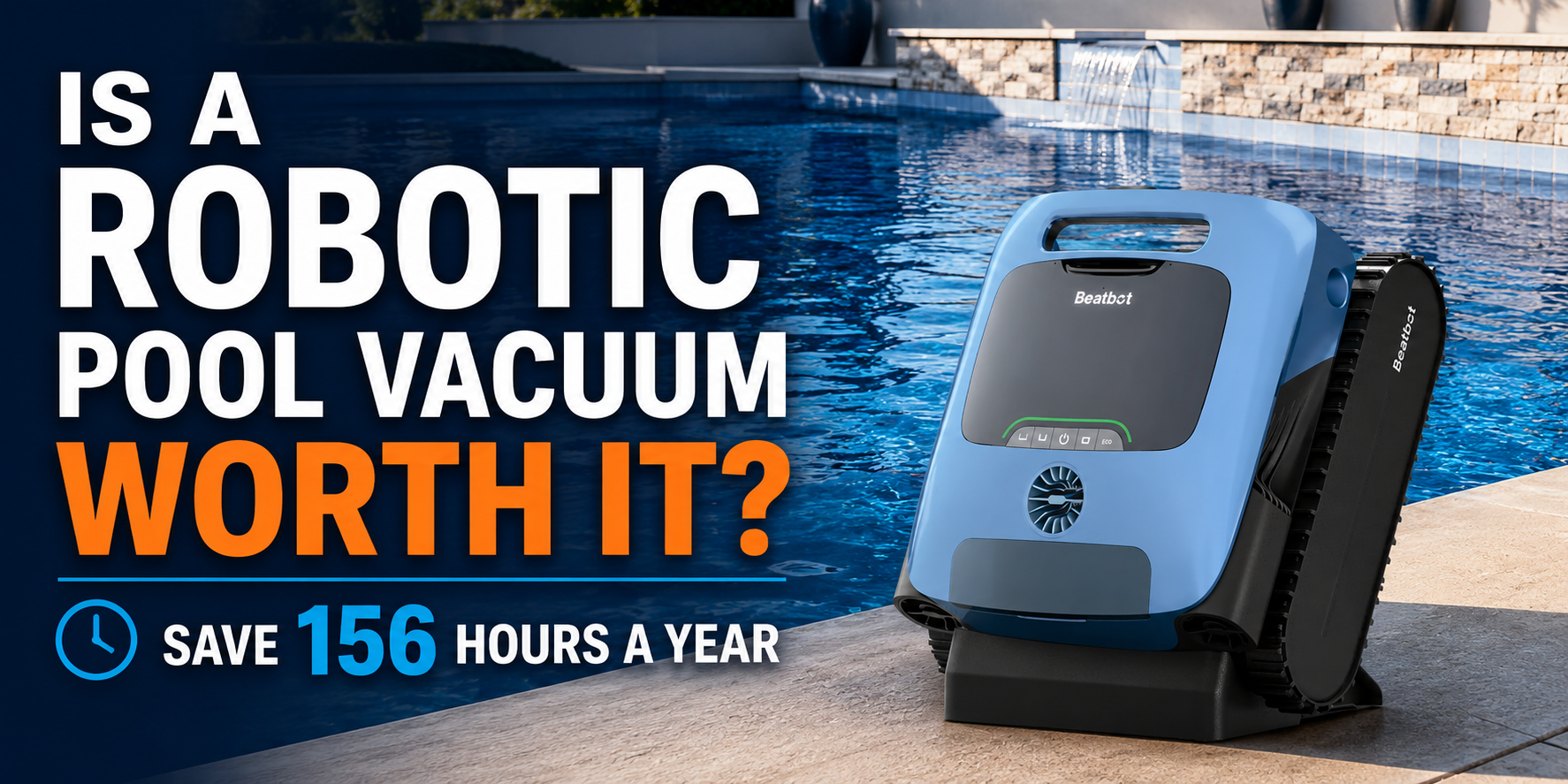
With a robotic pool vacuum, you'll save roughly 3 hours of manual cleaning every week. That's 156 hours a year you get back. Meanwhile, the robot runs on about 5 cents worth of electricity per cleaning cycle compared to $0.40-$0.50 when running your pool's main pump system.
Why Arizona Pool Owners Face Different Cleaning Challenges
Arizona pools face a challenge many other regions don't. We have fine dust and silt that consistently enters our pools.
Monsoon Dust and Sand
"A lot of pools around the country deal mostly with leaves and larger debris. In Arizona, it's the fine dust, sand, and monsoon debris that creates the biggest cleaning challenge." - TJ Gapinski, 25 Year Pool Cleaner Expert from Solenis
Who Should Buy a Robotic Pool Cleaner?
These devices make the most sense for specific types of pool owners:
- Busy homeowners - If weekends are precious and you'd rather swim than scrub, the set-it-and-forget-it operation is worth every penny
- Busy homeowners - If weekends are precious and you'd rather swim than scrub, the set-it-and-forget-it operation is worth every Families who swim frequently - Heavy pool use means constant debris and dirt. Automation keeps the water clean without daily manual work
- Owners of medium to large pools - Manual cleaning becomes genuinely exhausting when you're dealing with hundreds of square feet of surface area
- Properties with trees nearby - If you're constantly dealing with leaves, pollen, and organic debris, a robot handles this daily battle for you
- Long-term thinkers - Yes, the upfront cost stings, but the 5-8 year lifespan and energy savings add up to real money over time
These cleaners also improve water clarity and reduce chemical usage. Basically, they catch debris before it breaks down and creates water chemistry problems.
When Does Manual Cleaning Make More Sense?
A robotic cleaner isn't right for every situation:
If you only swim a few times each summer, manual vacuuming probably covers your needs just fine. The same goes for small or above-ground pools - many robotic models aren't designed for these setups anyway.
Budget-conscious buyers might prefer suction-side cleaners despite the higher long-term costs and extra work involved. And if you're not comfortable with technology, dealing with motors, filter baskets, and smartphone apps might feel like more hassle than help.
The decision comes down to three things: how you value your time, what your pool demands, and whether you're comfortable with the technology.

.png?width=1920&height=1080&name=roboticcleaner%20(3).png)
What Makes Robotic Pool Cleaners Worth the Money?
"For new pool owners who want clean water without constant brushing or vacuuming, Beatbot has been one of the most intuitive and effective robotic cleaners we’ve tested. It handles floor-to-waterline cleaning with surprising consistency." — Chuck Schoch, Shasta Pool's Mesa Design Center Pool Product Specialist
Deciding to spend $800+ on a robotic pool cleaner, it helps to understand what you're actually getting for that price. Here are five benefits pool owners tell us make the biggest difference.
1. You Drop It In and Walk Away
No hoses to connect. No valves to adjust. You literally plug the unit in, drop it in the water, and it starts working. The cleaner maps your pool and systematically covers every surface without you standing there supervising.
Most homeowners spend about 3 hours every week on pool maintenance. This time you could be swimming instead of scrubbing. Many models let you schedule cleaning sessions, so your pool gets cleaned while you're at work or on vacation.
2. Your Electric Bill Won't Spike
Here's where robotic cleaners really shine: they use hardly any electricity. We're talking 0.05 kWh per hour or about the same as a standard light bulb. A typical 2-hour cleaning cycle costs you $0.03 to $0.06, which adds up to maybe $5-9 per year with regular use.
Compare that to running your pool pump for cleaning, which can cost 10 times as much. Some pool owners save $400-800 over five years just on electricity.
3. They Actually Clean Walls and Steps
Most automatic cleaners just push debris around the bottom of your pool. Robotic units climb walls, scrub steps, and clean the waterline where algae loves to grow. They use gyroscope navigation to follow specific patterns - N-shapes on walls, S-patterns on the floor - so they don't miss spots.
The sensors detect obstacles and navigate around them, ensuring complete coverage every time.
4. Cleaner Water, Fewer Chemicals
Robotic cleaners filter debris before it reaches your main pool filter. This means your pool's filtration system doesn't work as hard, your water stays clearer, and you need fewer chemical treatments.
The result? Your sanitizers work more effectively because they're not fighting as much contamination. You'll also backwash your filter less often, saving water and time.
5. They're Surprisingly Quiet
Unlike those noisy pressure-side cleaners that sound like a jet engine, robotic units run almost silently. You can have a conversation poolside while they're working.
Maintenance is minimal too - empty the debris basket and rinse the filter occasionally. Some newer models even send notifications to your phone when they're done cleaning or when filters need attention.
Why Robotic Pool Vacuums Perform Better in Arizona?
Arizona homeowners often assume all automatic cleaners perform similarly. However, robotic cleaners can offer their own filtration system instead of relying entirely on the pool's filtration equipment.
P300 Catches Fine Dust
"The basket on the P300 Pro or Ultra can catch the fine dust and silt that are common in Arizona pools, leaving your pool filter to catch larger debris." - TJ Gapinski, 25 Year Pool Cleaner Expert from Solenis
.png?width=1920&height=1080&name=roboticcleaner%20(4).png)
What are the Drawbacks to Consider Before Buying?
Before you get caught up in the convenience factor, let's talk about what robotic pool cleaners don't do well and what that means for you as a buyer.
1. High upfront cost for premium models
Entry-level units start around $400-$600, but the models most people actually want - the ones with reliable navigation and decent filtration - typically run $800-$1,500 or more. If you have a small pool or only swim a few times each summer, that's a lot of money for a device that might sit unused most of the year.
The math works better for frequent swimmers with larger pools, but even then, you're looking at a significant upfront expense that won't pay for itself for several years.
2. Filter basket maintenance is still required
Don't let anyone tell you these things are completely hands-off. You'll need to empty and rinse the filter basket regularly - sometimes after every cleaning cycle if your pool collects a lot of debris.
Miss this maintenance, and performance drops fast. The robot might start missing spots or stop climbing walls effectively.
3. May struggle with large or heavy debris
Budget models especially have trouble with acorns, sticks, or soggy leaves. Their intake ports clog easily, and the filter baskets fill up quickly with bulky items. You'll still need to skim floating debris manually, and you might need to do a quick manual cleanup of large items before running the robot.
This becomes particularly frustrating during fall when leaves are constantly dropping.
4. Repairs can be expensive post-warranty
Pool chemicals and UV exposure are hard on electronics. When something breaks after the warranty expires, you're looking at $50-$400+ in repair costs, depending on what failed. Motors, control boards, and seals all degrade over time.
If repair costs hit 50% of what a new unit costs, you're usually better off replacing the whole thing.
5. Doesn't replace your pool's filtration system
This is important: a robotic cleaner supplements your existing pool system, it doesn't replace it. You'll still need to run your main pump and filter to maintain water chemistry and circulation.
Some people assume they can scale back on their regular pool maintenance routine, but that's not how it works.
How to Know If a Robotic Cleaner Is Right for Your New Pool?
The robotic cleaner that works great for your neighbor’s pool might not be the best fit for yours. The right choice depends on your pool design, your backyard environment, and how you want to handle maintenance once your new pool is up and running.
You'll get the most value if you have:
A large pool with heavy use. Manual cleaning a 20x40 foot pool is a workout. If your family swims multiple times a week, or you're constantly dealing with leaves and debris from nearby trees, a robotic cleaner pays for itself quickly. The bigger the pool and the more it gets used, the more sense automation makes.
A packed schedule. Busy families see the biggest return on investment. If you're already struggling to find time for pool maintenance, spending $800 to get your weekends back is a no-brainer. You drop it in the water, and it handles the work while you're at soccer practice or running errands.
Comfort with basic technology. Modern robotic cleaners aren't complicated, but they do have filter baskets to empty, timers to set, and occasionally troubleshooting to do. If you can handle a smartphone and don't mind reading a manual, you'll be fine.
Skip the robotic cleaner if:
You have a small or seasonal pool. Owners of small above-ground pools or those who only swim a few times each summer won't see enough value. Manual cleaning a small pool takes 30 minutes. A robotic cleaner that costs $600+ doesn't make financial sense for occasional use.
Budget is your top priority. If you need the cheapest option upfront, stick with manual cleaning or a basic suction cleaner. Yes, you'll spend more on electricity and time long-term, but the initial cost is much lower.
You prefer hands-on maintenance. Some pool owners actually enjoy the manual cleaning process. If you like the control and don't mind the physical work, there's nothing wrong with sticking with traditional methods.
At the end of the day, robotic cleaners are ideal for new pool owners who want consistent results with less weekly effort. If you’re looking for a simple way to keep your new Shasta pool clean and inviting, a robotic cleaner can be one of the most valuable upgrades you make.
Make the Right Choices for Your New Pool — Including the Right Cleaner
Choosing a robotic pool cleaner is just one of the important decisions you'll make as you bring your new pool to life. For many Arizona families, it becomes one of those upgrades that pays off immediately—keeping water clear, cutting back on weekly maintenance, and protecting the new surfaces you’ve invested in from day one.
But like every pool decision, the best choice depends on your design, your yard, and how you plan to enjoy your pool. Smaller pools or low-use backyards may not need the extra convenience, while busy households or high-activity pools often see the value instantly. The key is choosing the cleaning approach—robotic, in-floor, suction, manual, or professional service—that fits your lifestyle.
With more than 60 years of experience building and caring for Arizona pools, Shasta knows what works in our climate. Your designer or product specialist can help you determine whether a robotic cleaner is the right fit and recommend the best options for your pool’s shape, finish, and long-term care.

Key Takeaways
Robotic pool vacuums offer significant value for most pool owners through automation, energy efficiency, and long-term cost savings, but the investment makes most sense for specific situations.
- Robotic pool cleaners save 3 hours weekly of manual maintenance while using only 0.05 kWh per hour—costing just $0.03-$0.06 per cleaning cycle.
- Best for busy homeowners with large pools who frequently swim and deal with debris from nearby trees or vegetation.
- Premium models ($800-$2,000) last 5-8 years and pay for themselves through reduced energy costs and chemical usage over time.
- Not ideal for small or seasonal pools where manual cleaning requires minimal effort and the high upfront cost can't be justified.
- Still requires maintenance including regular filter basket emptying and cannot replace your pool's main filtration system entirely.
While robotic pool vacuums don't eliminate all pool maintenance tasks, they transform weekly chores into occasional oversight, making pool ownership more enjoyable for those who value their time and want consistently clean water.
FAQs
Q1. Are robotic pool cleaners energy-efficient? Yes, robotic pool cleaners are highly energy-efficient. They typically consume only about 0.05 kWh per hour, which is comparable to a standard light bulb. This low power consumption can lead to significant savings on electricity bills compared to traditional pool cleaning methods.
Q2. How much maintenance do robotic pool vacuums require? While robotic pool vacuums reduce overall maintenance, they still require some attention. You'll need to regularly empty and rinse the filter basket, which may be needed after each cleaning cycle depending on the amount of debris. However, this task is generally quick and simple, especially with models featuring top-load filters.
Q3. Can robotic pool cleaners handle large debris? Some robotic pool cleaners, particularly budget models, may struggle with large or heavy debris like acorns, sticks, or wet leaves. Their intake ports can clog, or filter baskets may fill quickly. For pools with a lot of large debris, manual pre-cleaning or a model specifically designed for heavy-duty cleaning may be necessary.
Q4. How long do robotic pool cleaners typically last? The lifespan of a robotic pool cleaner varies depending on the quality and maintenance. Premium models typically last 5-8 years with proper care, while budget options may only last 1-3 years. Regular maintenance and proper storage can help extend the life of your robotic pool cleaner.
Q5. Are robotic pool cleaners worth the investment for all pool owners? Robotic pool cleaners are most worthwhile for owners of medium to large pools, busy homeowners, and those with frequent pool usage. They may be less cost-effective for small pools, seasonal use, or for those on a tight budget. The decision depends on factors like pool size, usage frequency, surrounding environment, and personal preferences for pool maintenance.
References
ShastaPoolSupply.com 8 Types of Pool Cleaners
Pentair.com The Benefits of Robotic Pool Cleaners
Angi.com How Much Does a Pool Vacuum Cost?
Topics:
